


NISM X Taxmann's Portfolio Managers – Practice-Grade Guide to Portfolio Management in India—Spanning Asset Classes | Portfolio Theory | Risk | Strategy | Performance | SEBI Regulatory Framework
NISM X Taxmann's Portfolio Managers – Practice-Grade Guide to Portfolio Management in India—Spanning Asset Classes | Portfolio Theory | Risk | Strategy | Performance | SEBI Regulatory Framework
Couldn't load pickup availability
 Worldwide Delivery
 30 Days Easy Return
 Secure Payment
- Author: NISM (An Educational Initiative of SEBI)


Product Description
Portfolio Managers by NISM is a comprehensive, structured treatment of the theory and practice of portfolio management as practised in India. It carries the reader across the full investment-management value chain—the major asset classes and how they are valued; the body of portfolio theory (Modern Portfolio Theory, capital-market theory and CAPM, market efficiency and behavioural finance); the measurement and management of risk; active and passive equity and fixed-income strategy; performance measurement and attribution; and portfolio rebalancing—and sets all of it within the Indian taxation, regulatory, governance and ethical framework that governs portfolio managers, including the SEBI (Portfolio Managers) Regulations 2020. The treatment is rigorous and quantitative: every concept is developed from first principles and demonstrated through worked examples. It is the official workbook for the NISM-Series-XXI-B: Portfolio Managers certification examination, and serves equally as a standalone reference on the discipline. This book is intended for the following audience: Practising Portfolio Managers and PMS Professionals seeking a consolidated reference on the discipline Principal Officers, Compliance Officers and Employees of SEBI-Registered Portfolio Managers Wealth Managers, Investment Advisers, Research Analysts and Distributors who want a rigorous, computation-grounded grasp of portfolio management Candidates preparing for the NISM-Series-XXI-B certification examination Finance and Management Students (including CFA-track candidates) building foundations in portfolio theory, valuation and the PMS framework The Present Publication is the September 2025 Workbook Version, developed in collaboration with the NISM Certification Team, Dr Rachana Baid (Professor, NISM), and reviewed by Dr Kishore Rathi and Dr Kameshwar Rao (Resource Persons, NISM). It is published exclusively by Taxmann, with the following noteworthy features: [Comprehensive and Self-Contained] A complete treatment of portfolio management that builds from first principles (saving vs. investment) right through to advanced portfolio construction, strategy, performance and rebalancing, with no prior specialist background assumed [Applied and Quantitative] Concepts are demonstrated through fully worked numerical illustrations and solved examples, not formulae alone, at a level that can be reproduced on a spreadsheet [Statutory Text at Source] Relevant regulatory provisions are reproduced directly (for example, definitions under the Securities Contracts (Regulation) Act, Section 6 of the Income-tax Act, and provisions of the SEBI Portfolio Managers, Insider Trading and PFUTP Regulations) for ready reference [Rich Visual Apparatus] Exhibits, boxes, tables and illustrations placed alongside the concept they explain [Self-Assessment] Each chapter is framed by Learning Objectives and closes with Sample Questions; selected chapters include Sample Caselets, and the caselets together with the quantitative items in the later chapters carry answer keys and fully worked, step-by-step explanations [Syllabus-Aligned with Computational Support] Organised to the NISM-Series-XXI-B syllabus and its unit weightages, with a Z-Table annexure supporting the probability, standard-deviation and value-at-risk computations The coverage of the book is as follows: Investment Foundations o Saving vs. investment vs. speculation; investment objectives; the decomposition of the required rate of return into the real risk-free rate, an inflation premium and a risk premium; the risk–return relationship; and the universe of investment types and channels Securities-Market Architecture o Primary vs. secondary markets and methods of issuance; the roles of intermediaries; and the mechanics of clearing and settlement, including the clearing corporation's novation of trades and the use of initial margin (set on a value-at-risk basis) and mark-to-market margin Equity Investing o Equity as an asset class and its risks; top-down economy–industry–company analysis; cyclical vs. non-cyclical sectors across the business cycle; equity research and stock selection (dividend-discount, free-cash-flow and relative-valuation approaches); technical analysis; credit-rating scales; and corporate governance Fixed Income o Bond characteristics and determinants of safety; bond valuation with frequency-adjusted discounting; yield to maturity and yield to call; day-count conventions (30/360, actual/365, actual/actual); and the measurement of price volatility Derivatives o Forwards, futures, options and swaps; in-/at-/out-of-the-money and intrinsic vs. time value; interest-rate swaps and the notional-principal concept; the law of one price and arbitrage; the margining process; and the use of derivatives by portfolio managers Mutual Funds o Legal structure and working; product types; the scheme fact sheet; NAV, total expense ratio and unit pricing; and key performance measures Role of Portfolio Managers o Discretionary, non-discretionary and advisory PMS; the SEBI registration application and net-worth requirements; the general responsibilities of a portfolio manager (fiduciary duty, the ?50 lakh minimum investment with accredited-investor and co-investment exemptions, client-wise segregation of securities holdings, and the maintenance of client funds in a separate account with a scheduled commercial bank); and pooled vs. individual-name execution Operational Aspects of PMS o Eligible investors; the disclosure document; client on-boarding and direct on-boarding; KYC, in-person verification and the central KYC registry (CKYCR/CERSAI); default liability and grievance redressal; disclosures to SEBI and suspicious-transaction reporting to FIU-IND; and the full fee and expense structure Portfolio-Management Process o The Investment Policy Statement and its constituents; risk–return–liquidity objectives; cross-asset correlation; strategic vs. tactical asset allocation ('time in the market' vs. 'timing the market'); investment-approach and benchmark tagging; and rebalancing Taxation o Residential status under Section 6 of the Income-tax Act (the day-count tests, deemed resident and RNOR); capital-gains vs. business-income characterisation of securities gains; the taxation of dividends, interest and capital gains across investor classes; the optional regimes under Sections 115BAC/115BAA/115BAB; and Section 9A together with the Eligible Fund Manager regime Regulatory, Governance and Ethics o The PMLA 2002; SEBI (Prohibition of Insider Trading) Regulations 2015; SEBI (PFUTP) Regulations 2003; SEBI (Portfolio Managers) Regulations 2020 (including the Eligible Fund Managers chapter and the Regulation 30 annual audit); soft-dollar practice; the Investor Charter; the Cyber Security and Cyber Resilience Framework; and best practices Indices o The factors that differentiate indices, index methodologies, and equity, bond and composite indices Informational Efficiency o Operational vs. informational efficiency; the random-walk hypothesis and Fama's fair-game/EMH formulation (weak-, semi-strong- and strong-form); market anomalies (the January/tax-selling, size and value effects); and the implications for valuation and portfolio management Behavioural Finance o Behavioural vs. standard finance; emotional biases (loss aversion, endowment, status-quo and regret aversion across errors of commission and omission); cognitive errors (mental accounting and fungibility, framing); nudges; and fusion investing Modern Portfolio Theory o Ex-ante vs. ex-post return; probability-weighted expected return and variance; the Markowitz portfolio-risk formula and the role of covariance and correlation in diversification; the efficient frontier; and portfolio optimisation Capital-Market Theory o Combining risk-free and risky assets; the Capital Market Line; the market portfolio and its proxies; the Capital Asset Pricing Model and the Security Market Line (identifying under- and over-valued securities); empirical tests of CAPM; and multi-factor models Risk o The risk-management process; market, credit, liquidity, operational and other risks; portfolio-risk mathematics; value-at-risk by the parametric and historical-simulation methods; the credit 'four Cs', probability of default and loss given default; and tail-risk/black-swan preparedness through scenario planning and stress testing Equity Portfolio Strategies o Buy-and-hold and indexing (full replication); active management and the fundamental law of active management; smart-beta and factor-based portfolios (macroeconomic, fundamental and statistical factor models, illustrated with NIFTY multi-factor indices); momentum investing; growth, value and blended styles; socially responsible investing; the core-and-satellite approach; alpha–beta separation; and constructing and protecting equity portfolios with derivatives, including the protective put Fixed-Income Portfolio Strategies o Passive approaches (indexing with its sources of tracking error, and immunization through duration matching); active approaches (duration management via directional calls and barbell/bullet structures, and yield-spread strategies); global fixed-income investing and country risk; and building and protecting bond portfolios with derivatives Performance Measurement and Evaluation o Holding-period return; time-weighted vs. money-weighted rates of return; risk measures including standard deviation and downside/semi-variance; risk-adjusted measures (the Sharpe, Treynor and Sortino ratios, the information/appraisal ratio and the M² measure); benchmarking and peer-group analysis; performance attribution into allocation, selection and interaction effects; reporting; due diligence and manager selection; and the Global Investment Performance Standards (GIPS®) Portfolio Rebalancing o The rationale, costs and periodicity of rebalancing; time- vs. threshold-based approaches; and the buy-and-hold, constant-mix and constant-proportion portfolio insurance (CPPI) strategies, including the multiplier and floor mechanics The book is organised into 21 chapters that progress through four logical blocks, closing with an annexure: Asset Classes and Market Building Blocks (Chapters 1–6) — Investments, securities markets, equity, fixed income, derivatives and mutual funds The PMS Business: Role, Operations, Process, Tax and Regulation (Chapters 7–11) — The portfolio manager's role and registration, operational and on-boarding aspects, the portfolio management process, taxation, and the regulatory, governance and ethical framework Portfolio Theory and Risk (Chapters 12–17) — Indices, informational efficiency, behavioural finance, Modern Portfolio Theory, capital-market theory, and risk Strategy, Performance and Rebalancing (Chapters 18–21) — Equity portfolio strategies, fixed-income portfolio strategies, performance measurement and evaluation, and portfolio rebalancing Annexure — A Z-Table for probability and risk computations The internal architecture of every chapter is uniform: o A Learning Objectives panel at the start o Numbered, progressively sequenced sections of explanatory text o Exhibits, boxes, tables and worked numerical illustrations placed alongside the concept they support o Extracts of statutory or regulatory text wherever the topic is rule-driven o A closing set of Sample Questions, with a Sample Caselet in selected chapters; the caselets and the later quantitative items include answer keys and fully worked explanations Read more
Customers also viewed
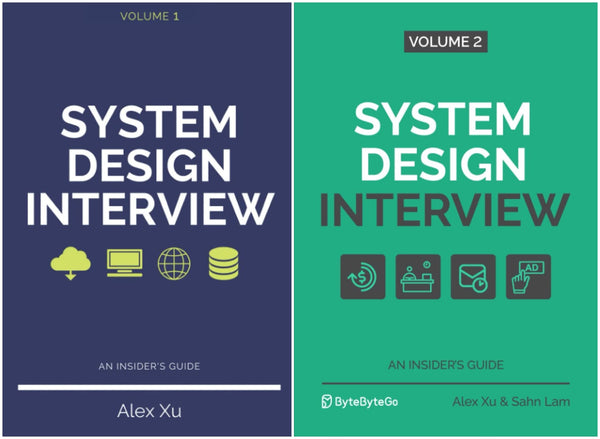
System Design Interview: An Insider’s Guide – 2 Volume Set by Alex Xu

The Mirror of Infinite Endings: The highly anticipated return to the No. 1 Sunday Times bestselling Once Upon a Broken Heart series and the epic love story of Jacks and Evangeline

Psychology (7th Edition) | Pearson | NEP 2020 Aligned | By Saundra K. Ciccarelli, J. Noland White & Girishwar Misra

Threshing Day (Limited Deluxe Edition): Return to the Empyrean world with thirteen stories starring your favourite Fourth Wing characters.

The 100 Year Blueprint: An Indian Doctor's Guide to Longevity

Maa Amma Anadha | ?? ???? ???? | Telugu Novel by GANA

Mahaprastanam - (Telugu)

Jujutsu Kaisen Manga Box Set 2 Vol. 22-30 - Complete Collection Series 8 Books Collection Set (Jujutsu Kaisen books box set Vol 22-30) By Gege Akutami

Jujutsu Kaisen Manga Box Set (Vol. 0-30) - Complete Collection Series 31 Books Collection Set (Jujutsu Kaisen books box set Vol 0-30) By Gege Akutami

Ayodhya Cherina Krishna - Telugu Novel

Atomic Habits: An Easy & Proven Way to Build Good Habits & Break Bad Ones

Death: An Inside Story

The Laws of the Spirit World

Cims India Medical Reference Book for B.Pharm/M.Pharm Students and Medical Representatives

Bratva Bride (Bratva Series)

Ncert Biology Text Book for Class 11 and 12 (Set of 2 Books)

Pathoma

My First 100 Animals Stickers

My First 100 Animals And Birds | Ages 0–5 Years | Early Learning | Padded Board Book For Kids | Wild Animals | Farm Animals | Pets | Vocabulary Building | Toddlers & Preschoolers | Latest Edition
Collections
View all-

Bestselling Books Collection
Explore our top-selling books loved by readers worldwide. This collection features the...
-

Most Ordered
Explore the Most Ordered books at UniversalReads. Featuring top-rated titles across fiction,...
-

Children's Books
Discover the best Children’s Books at UniversalReads. From bedtime stories to early...
-

Arts & Photography
Discover inspiring Arts & Photography books at UniversalReads. From painting guides to...