


Taxmann's Indian Penal Code 1860 [Bare Act without Comments | AIBE] – Complete Statutory Text for AIBE-XXII | Repeal by the Bharatiya Nyaya Sanhita 2023 Recorded on the Page
Taxmann's Indian Penal Code 1860 [Bare Act without Comments | AIBE] – Complete Statutory Text for AIBE-XXII | Repeal by the Bharatiya Nyaya Sanhita 2023 Recorded on the Page
Couldn't load pickup availability
 Worldwide Delivery
 30 Days Easy Return
 Secure Payment
- Author: Taxmann
![Taxmann's Indian Penal Code 1860 [Bare Act without Comments | AIBE] – Complete Statutory Text for AIBE-XXII | Repeal by the Bharatiya Nyaya Sanhita 2023 Recorded on the Page](http://universalreads.com/cdn/shop/files/612mb_SkXUL.jpg?v=1790614040&width=1445)
![Taxmann's Indian Penal Code 1860 [Bare Act without Comments | AIBE] – Complete Statutory Text for AIBE-XXII | Repeal by the Bharatiya Nyaya Sanhita 2023 Recorded on the Page](http://universalreads.com/cdn/shop/files/71zbc6AKOBL.jpg?v=1790614040&width=1445)
![Taxmann's Indian Penal Code 1860 [Bare Act without Comments | AIBE] – Complete Statutory Text for AIBE-XXII | Repeal by the Bharatiya Nyaya Sanhita 2023 Recorded on the Page](http://universalreads.com/cdn/shop/files/71EQWSWxOCL.jpg?v=1790614040&width=1445)
![Taxmann's Indian Penal Code 1860 [Bare Act without Comments | AIBE] – Complete Statutory Text for AIBE-XXII | Repeal by the Bharatiya Nyaya Sanhita 2023 Recorded on the Page](http://universalreads.com/cdn/shop/files/41eqDh1vQkL.jpg?v=1790614040&width=1445)
![Taxmann's Indian Penal Code 1860 [Bare Act without Comments | AIBE] – Complete Statutory Text for AIBE-XXII | Repeal by the Bharatiya Nyaya Sanhita 2023 Recorded on the Page](http://universalreads.com/cdn/shop/files/41GAIBwdDaL.jpg?v=1790614040&width=1445)
![Taxmann's Indian Penal Code 1860 [Bare Act without Comments | AIBE] – Complete Statutory Text for AIBE-XXII | Repeal by the Bharatiya Nyaya Sanhita 2023 Recorded on the Page](http://universalreads.com/cdn/shop/files/416tYJ5pqbL.jpg?v=1790614040&width=1445)
Product Description
Indian Penal Code 1860 [Bare Act without Comments] by Taxmann for the All India Bar Examination (AIBE) is the 2026 Edition of Act 45 of 1860, the Code enacted, in the words of its own Preamble, because it was expedient to provide a general Penal Code for India. It carries all twenty-six Chapters and all 574 section entries, covering sections 1 to 511 together with sixty-three lettered sections, with the Explanations and the Illustrations printed in full. The edition is published for the AIBE-XXII (22) cycle, whose paper is set for 29th November 2026. The Code was repealed by the Bharatiya Nyaya Sanhita 2023, which came into force on 1st July 2024. The volume records the repeal on its opening page, in a starred note against the Code's own title, and then prints the Code in full. It does that because the AIBE head is examined on both: the question papers, the reported decisions and the practice literature are still written in the Penal Code's numbering, and this volume is where that numbering is set out. A candidate needs the Sanhita because it is the law and this Code because it is the language. Printed without notes, comments, annotations or commentary, the volume is in the form the Bar Council of India permits candidates to carry into the AIBE examination hall. The statutory text is freely available; what this edition supplies is that permitted form, the amendment record and the apparatus that makes a section quick to reach. The AIBE paper sets 100 questions in 3 hours 30 minutes, a little over two minutes a question, and the Penal Code and the Bharatiya Nyaya Sanhita together carry 8 of the 100 marks. Three things cost time in an open-book hall. Finding the section is answered by the twenty-six-page section-wise contents and by a section number in the running head on every page after the first. Confirming that the words in front of you are the amended words is answered by forty-six footnotes naming the instrument behind each change, forty-five of them with the date it took effect, with ibid carrying the date forward at six places, and by the wording they replaced reproduced at five. Reading the offence correctly is answered by the ninety-nine Illustration blocks the Code carries, which are set out here in full wherever the section carries them. The volume prints no “law stated as on” line. The last amendment the Code received was made by the Jammu and Kashmir Reorganisation Act 2019, from 31st October 2019. Eleven instruments are tracked in all, and the largest single source is not a criminal statute: the Information Technology Act 2000 and its Amendment Act of 2008 account for nineteen of the forty-six footnotes between them, more than any other instrument. The Criminal Law (Amendment) Acts of 2013 and 2018 account for thirteen more. This book is intended for the following audience: AIBE-XXII (22) Candidates—who sit the paper on 29th November 2026 and need the Code's own text on a head examined on both the Code and the Sanhita, and worth 8 of the 100 marks Criminal-side Juniors—who appear in matters registered before 1st July 2024, where the charge, the record and the argument are all framed in Penal Code sections Final-year Law Students—studying criminal law, where the syllabus, the reading list and the reported decisions are still framed in this Code's numbering Candidates Moving Between the Code and the Sanhita—who need the old section in front of them while they learn the new one Coaching Institutes and Law Libraries—stocking the Code alongside the Bharatiya Nyaya Sanhita for the AIBE cycle The Present Publication is the 2026 Edition, carrying the amended and updated text of the Indian Penal Code 1860, published in Taxmann's Bare Act without Comments series for the AIBE, with the following noteworthy features: [Permitted Form] Printed without notes, comments, annotations or commentary, in the form the Bar Council of India permits candidates to carry into the examination hall [Repeal Recorded on the Page] A starred note against the Code's title records that the Bharatiya Nyaya Sanhita 2023 repealed it, so a reader knows what they are holding before they read a word of it [Complete Code] All twenty-six Chapters and all 574 section entries, covering sections 1 to 511 together with sixty-three lettered sections, with twenty-one sections kept in place as marked omitted entries [Illustrations in Full] The Penal Code teaches by example, and all ninety-nine of its Illustration blocks are printed where the section carries them, with the Explanations alongside [Updated & Amended] Forty-six footnotes naming the instrument behind each change, forty-five of them with the date it took effect, the last being the Jammu and Kashmir Reorganisation Act 2019 of 31st October 2019; the forty-sixth is section 153AA, which carries no date because it was never notified [Superseded Text Retained] The wording each amendment replaced reproduced at five places, with ibid used six times for repeat references to the same instrument [A Provision That Never Commenced, Marked As Such] Section 153AA was inserted by the Code of Criminal Procedure (Amendment) Act 2005 with effect from a date yet to be notified, and its footnote says so rather than leaving a reader to assume it was in force [Omissions Visible in the Contents] The twenty-one omitted sections are marked in the contents as well as in the body, so a section number that no longer carries an offence is not hunted for twice [Section-wise Contents] A twenty-six-page contents listing every section entry by number, marginal heading and page under its Chapter [Running Heads] A section number in the running head on all 146 pages after the opening one, so a reference given as a section number is found by turning rather than by reading The structure of the book is as follows: The volume opens with a twenty-six-page section-wise contents, then the Preamble and the Code Chapters run I to XXIII with Chapters VA, IXA and XXA among them, twenty-six in all Sections run under their marginal headings, with inserted and substituted matter set in square brackets and keyed to the footnote that records it Explanations, Exceptions and Illustrations are printed where the section carries them Twenty-one sections stand as marked omitted entries, in the contents as well as in the body Footnotes sit at the foot of the page in a single numbered run of forty-six, keyed to superscript markers Two starred notes sit apart from that run: the repeal note on printed page 1, and an 1873 omission inside the definition of public servant in section 21 The text ends at section 511 on printed page 147 Read more
Customers also viewed
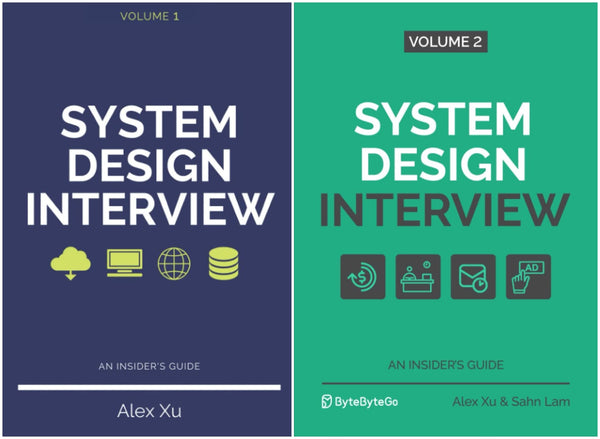
System Design Interview: An Insider’s Guide – 2 Volume Set by Alex Xu

The Mirror of Infinite Endings: The highly anticipated return to the No. 1 Sunday Times bestselling Once Upon a Broken Heart series and the epic love story of Jacks and Evangeline

Psychology (7th Edition) | Pearson | NEP 2020 Aligned | By Saundra K. Ciccarelli, J. Noland White & Girishwar Misra

Threshing Day (Limited Deluxe Edition): Return to the Empyrean world with thirteen stories starring your favourite Fourth Wing characters.

The 100 Year Blueprint: An Indian Doctor's Guide to Longevity

Maa Amma Anadha | ?? ???? ???? | Telugu Novel by GANA

Mahaprastanam - (Telugu)

Jujutsu Kaisen Manga Box Set 2 Vol. 22-30 - Complete Collection Series 8 Books Collection Set (Jujutsu Kaisen books box set Vol 22-30) By Gege Akutami

Jujutsu Kaisen Manga Box Set (Vol. 0-30) - Complete Collection Series 31 Books Collection Set (Jujutsu Kaisen books box set Vol 0-30) By Gege Akutami

Ayodhya Cherina Krishna - Telugu Novel

Atomic Habits: An Easy & Proven Way to Build Good Habits & Break Bad Ones

Death: An Inside Story

The Laws of the Spirit World

Cims India Medical Reference Book for B.Pharm/M.Pharm Students and Medical Representatives

Bratva Bride (Bratva Series)

Ncert Biology Text Book for Class 11 and 12 (Set of 2 Books)

Pathoma

My First 100 Animals Stickers

My First 100 Animals And Birds | Ages 0–5 Years | Early Learning | Padded Board Book For Kids | Wild Animals | Farm Animals | Pets | Vocabulary Building | Toddlers & Preschoolers | Latest Edition
Collections
View all-

Bestselling Books Collection
Explore our top-selling books loved by readers worldwide. This collection features the...
-
Most Ordered
Explore the Most Ordered books at UniversalReads. Featuring top-rated titles across fiction,...
-
Children's Books
Discover the best Children’s Books at UniversalReads. From bedtime stories to early...
-

Arts & Photography
Discover inspiring Arts & Photography books at UniversalReads. From painting guides to...