


Taxmann's Industrial Relations Code 2020 with Rules 2026 [Bare Act with Section Notes] – Presenting the Code | Section Notes | Case Laws | Central Rules | Comparative Study | Notifications | Others
Taxmann's Industrial Relations Code 2020 with Rules 2026 [Bare Act with Section Notes] – Presenting the Code | Section Notes | Case Laws | Central Rules | Comparative Study | Notifications | Others
Couldn't load pickup availability
 Worldwide Delivery
 30 Days Easy Return
 Secure Payment
- Author: Taxmann
![Taxmann's Industrial Relations Code 2020 with Rules 2026 [Bare Act with Section Notes] – Presenting the Code | Section Notes | Case Laws | Central Rules | Comparative Study | Notifications | Others](http://universalreads.com/cdn/shop/files/719WZwdOY6L.jpg?v=1790614044&width=1445)
![Taxmann's Industrial Relations Code 2020 with Rules 2026 [Bare Act with Section Notes] – Presenting the Code | Section Notes | Case Laws | Central Rules | Comparative Study | Notifications | Others](http://universalreads.com/cdn/shop/files/71IyJPCDK_L.jpg?v=1790614044&width=1445)
![Taxmann's Industrial Relations Code 2020 with Rules 2026 [Bare Act with Section Notes] – Presenting the Code | Section Notes | Case Laws | Central Rules | Comparative Study | Notifications | Others](http://universalreads.com/cdn/shop/files/716Mhty_BhL.jpg?v=1790614044&width=1445)
![Taxmann's Industrial Relations Code 2020 with Rules 2026 [Bare Act with Section Notes] – Presenting the Code | Section Notes | Case Laws | Central Rules | Comparative Study | Notifications | Others](http://universalreads.com/cdn/shop/files/41Fn4iEHqgL.jpg?v=1790614044&width=1445)
![Taxmann's Industrial Relations Code 2020 with Rules 2026 [Bare Act with Section Notes] – Presenting the Code | Section Notes | Case Laws | Central Rules | Comparative Study | Notifications | Others](http://universalreads.com/cdn/shop/files/41_St4hw1bL.jpg?v=1790614044&width=1445)
![Taxmann's Industrial Relations Code 2020 with Rules 2026 [Bare Act with Section Notes] – Presenting the Code | Section Notes | Case Laws | Central Rules | Comparative Study | Notifications | Others](http://universalreads.com/cdn/shop/files/41E7udbWBYL.jpg?v=1790614044&width=1445)
Product Description
Industrial Relations Code 2020 with Industrial Relations (Central) Rules 2026 [Bare Act with Section Notes] by Taxmann is a fully consolidated, application-ready statutory publication presenting India's industrial relations law in its complete, post-enforcement form. The Industrial Relations Code—brought into force with effect from 21st November 2025 vide Notification S.O. 5320(E)—subsumes and replaces three foundational labour statutes, namely the Trade Unions Act 1926, the Industrial Employment (Standing Orders) Act 1946, and the Industrial Disputes Act 1947, reconstituting them into a single legislative architecture governing trade unions, standing orders, industrial disputes, strikes, lock-outs, lay-off, retrenchment, and closure. This July 2026 Edition states the law as amended and updated till 20th July 2026, and reflects the Code as amended by the Industrial Relations Code (Amendment) Act 2026 with retrospective effect from 21st November 2025, along with the latest tranche of implementation Notifications issued up to 11th June 2026. Its core editorial feature remains Section Notes—brief, plain-language explanations placed immediately after the statutory provision—together with relevant Case Laws reproduced beneath the section, simplifying dense legal terminology, highlighting key takeaways and operating consequences, and cross-referencing related Rules and decisions. The publication completes the statutory ecosystem with the finally notified Industrial Relations (Central) Rules 2026 [G.S.R. 342(E), dated 8-5-2026], the Model Standing Orders 2026 for the Mining, Manufacturing, and Service sectors [S.O. 2312(E), dated 8-5-2026], the Industrial Relations Code (Removal of Difficulties) Order 2025 [S.O. 5683(E), dated 8-12-2025] as amended by the Removal of Difficulties (Amendment) Order 2026, a front-placed Comparative Study, two-way sectional cross-reference Tables, a Subject Index, FAQs covering all four Labour Codes, and the Ministry of Labour & Employment's Compliance Handbook for Employers—making it a complete, single-volume operational reference for understanding, applying, and complying with India's industrial relations law in its post-enforcement phase. This publication is intended for users who apply, interpret, administer, or transition into the Industrial Relations Code regime, including: Labour & Employment Law Practitioners advising on industrial disputes, strikes, retrenchment, closure, and trade-union matters Corporate HR Heads, IR Managers, and Compliance Officers responsible for workforce governance, standing orders, and statutory compliance under the Code Employers, Industrial Establishments, and Management Representatives assessing new thresholds, permissions, fixed-term employment, and procedural requirements Trade Unions, Office-Bearers, and Worker Representatives interpreting collective rights, recognition mechanisms, and the negotiating union/negotiating council framework Industrial Tribunals, National Industrial Tribunal, Conciliation Officers, and other Adjudicatory Authorities applying the consolidated dispute-resolution architecture Certifying Officers, Appellate Authorities, Registrars of Trade Unions, and Verification Officers exercising statutory functions under the Code Law Students, Academicians, and Policy Researchers studying India's transition from legacy labour statutes to the Code-based framework The Present Publication is the July 2026 Edition, covering the text of the Industrial Relations Code [Act No. 35 of 2020] and Rules as amended and updated till 20th July 2026, with the following noteworthy features: [What's New in This Edition] Updated till 20th July 2026 and expanded in Division Three with the latest tranche of implementation Notifications—delegation to the Regional Labour Commissioner (Central) of the power to recover money due from an employer [S.O. 2320(E)], delegation of powers to examine applications relating to lay-off, retrenchment, and closure where the Central Government is the appropriate Government [S.O. 2323(E)], specification of the authority for the purposes of the issue of notice of retrenchment under section 70 [S.O. 2379(E)], and delegation of the power to appoint Verification Officers for recognition of a negotiating union or negotiating council under section 14 read with rule 9 [S.O. 2996(E), dated 11-6-2026] [Section Notes – Core USP] Brief, plain-language explanations placed immediately after the statutory provision, breaking down complex terms and procedures, highlighting key takeaways, and cross-referencing related Rules and authoritative decisions—turning the Bare Act into a self-contained working tool [Case Laws Beneath the Section] Relevant judicial precedents reproduced beneath the section to confirm standard interpretations, enable quick precedent verification, and provide authoritative reference for adjudication and compliance [Two-Way Statutory Cross-Reference Tables] Tables showing the sections of the Industrial Relations Code 2020 alongside their corresponding provisions in the repealed Trade Unions Act 1926, Industrial Employment (Standing Orders) Act 1946, and Industrial Disputes Act 1947, together with reverse-direction tables—enabling readers to locate provisions in either direction without consulting separate sources [Front-Placed Comparative Study] A detailed subject-wise and clause-wise comparison between the Industrial Relations Code 2020 and the repealed Acts, identifying retained provisions, substantive departures, rationalised thresholds, and consciously omitted concepts [Industrial Relations (Central) Rules 2026 – Final Notified Text] The notified Central Rules [G.S.R. 342(E), dated 8-5-2026], which supersede the Industrial Disputes (Central) Rules 1957 and the Industrial Employment (Standing Orders) Central Rules 1946 in the relevant respects, provide the operative procedural framework for implementation—reproduced in full with the Arrangement of Rules and the Schedule of prescribed forms [Model Standing Orders 2026] Sector-specific Model Standing Orders [S.O. 2312(E), dated 8-5-2026] organised across three Schedules—Schedule A (Mining Sector), Schedule B (Manufacturing Sector), and Schedule C (Service Sector)—available for direct adoption by employers [Removal of Difficulties Order 2025, as Amended in 2026] Reproduces the Industrial Relations Code (Removal of Difficulties) Order 2025 [S.O. 5683(E), dated 8-12-2025], under which the existing Labour Courts, Industrial Tribunals, and National Industrial Tribunals under the Industrial Disputes Act 1947 continue to adjudicate until the corresponding forums under the Code are in place; together with the Removal of Difficulties (Amendment) Order 2026, which, with effect from 2nd February 2026, extended the same continuity to all existing statutory authorities under the three repealed Acts—an essential reference for litigation continuity [Code as Amended by the Industrial Relations Code (Amendment) Act 2026] Incorporates sub-sections (1) and (1A) of section 104, substituted for sub-section (1) with retrospective effect from 21st November 2025, under which the Tribunals and statutory authorities constituted under the repealed Acts continue until the corresponding authorities under the Code become functional—with the pre-amendment text preserved in the footnotes for legislative continuity [Corresponding Provision Notes] Sections and Schedules that have a counterpart in the repealed Trade Unions Act 1926, the Industrial Employment (Standing Orders) Act 1946, or the Industrial Disputes Act 1947 carry a Corresponding Provision note naming that counterpart, so the lineage of the provision is visible on the page [Notifications on Enforcement and Repeal] Includes Notification S.O. 5320(E) appointing 21st November 2025 as the date of commencement, and Notification S.O. 465(E), dated 2-2-2026, which specifies that the Trade Unions Act 1926, the Industrial Employment (Standing Orders) Act 1946, and the Industrial Disputes Act 1947 stood repealed with effect from 21st November 2025 [Subject Index] A comprehensive Subject Index enabling navigation of the statutory text by concept, term, or compliance area [FAQs on the Four Labour Codes] A consolidated FAQ section addressing common practitioner and employer queries across the Code on Wages, the Industrial Relations Code, the Occupational Safety, Health and Working Conditions Code, and the Code on Social Security—covering definitional changes, threshold revisions, compliance flexibility, and worker protection [Compliance Handbook for Employers under the Four Labour Codes (Central Government Sphere)] The Ministry of Labour & Employment's handbook for employers, covering wage compliance, working hours and overtime, registers and records, gender-equal treatment, occupational safety, social-security contributions and statutory deadlines, closing with a consolidated summary of action points—converting the legal framework into actionable operational checklists [Statement of Objects, Notes on Clauses, and Appendix] Includes the original Statement of Objects and Reasons, section-wise Notes on Clauses, and an Appendix reproducing provisions of other Acts referred to in the Industrial Relations Code 2020—closing the legislative-history loop [Authoritative Bare Act Presentation] Maintains Taxmann's Bare Act editorial integrity—pure statutory text supported by Section Notes, Case Laws, and comparative context, without interpretational dilution The publication is organised across three Divisions, sequencing context, primary law, subordinate legislation, and operational compliance: Front Section | Context Before the Law o Comparative Study of the Industrial Relations Code, 2020 versus the Trade Unions Act 1926/Industrial Employment (Standing Orders) Act 1946/Industrial Disputes Act 1947 o Two-Way Sectional Tables — Code v Repealed Laws, and the reverse Division One | Industrial Relations Code 2020 o Arrangement of Sections o Text of the Industrial Relations Code 2020, with Section Notes and Case Laws — 104 sections across 14 Chapters, with the First, Second, and Third Schedules o Subject Index o Industrial Relations Code (Removal of Difficulties) Order 2025, as amended in 2026 o Statement of Objects and Reasons o Notes on Clauses o Appendix – Provisions of Other Acts Referred to in the Industrial Relations Code 2020 Division Two | Rules and Model Standing Orders o Arrangement of Rules o Industrial Relations (Central) Rules, 2026 — 50 Rules across 13 Chapters, with the Schedule of prescribed forms o Model Standing Orders 2026 — Schedule A (Mining Sector), Schedule B (Manufacturing Sector), Schedule C (Service Sector) Division Three | Notifications and Clarifications o Notifications — enforcement; repeal of the subsumed Acts; appropriate Government designations; appointment of Certifying Officers, Appellate Authorities and Conciliation Officers; the Worker Re-skilling Fund; compounding of offences; delegation of powers; and delegation of the power to appoint Verification Officers o FAQs on the Four Labour Codes o Compliance Handbook for Employers under the Four Labour Codes (Central Government Sphere) Read more
Customers also viewed
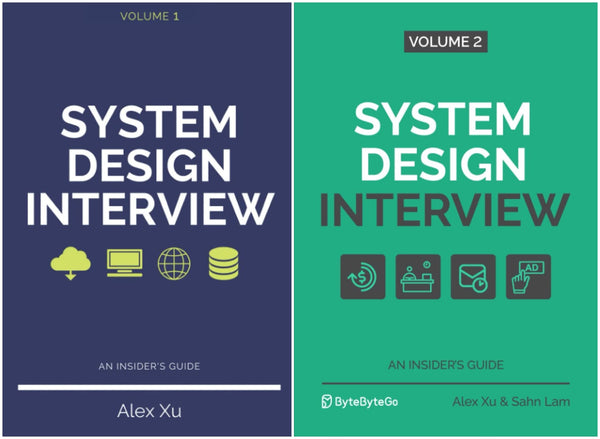
System Design Interview: An Insider’s Guide – 2 Volume Set by Alex Xu

The Mirror of Infinite Endings: The highly anticipated return to the No. 1 Sunday Times bestselling Once Upon a Broken Heart series and the epic love story of Jacks and Evangeline

Psychology (7th Edition) | Pearson | NEP 2020 Aligned | By Saundra K. Ciccarelli, J. Noland White & Girishwar Misra

Threshing Day (Limited Deluxe Edition): Return to the Empyrean world with thirteen stories starring your favourite Fourth Wing characters.

The 100 Year Blueprint: An Indian Doctor's Guide to Longevity

Maa Amma Anadha | ?? ???? ???? | Telugu Novel by GANA

Mahaprastanam - (Telugu)

Jujutsu Kaisen Manga Box Set 2 Vol. 22-30 - Complete Collection Series 8 Books Collection Set (Jujutsu Kaisen books box set Vol 22-30) By Gege Akutami

Jujutsu Kaisen Manga Box Set (Vol. 0-30) - Complete Collection Series 31 Books Collection Set (Jujutsu Kaisen books box set Vol 0-30) By Gege Akutami

Ayodhya Cherina Krishna - Telugu Novel

Atomic Habits: An Easy & Proven Way to Build Good Habits & Break Bad Ones

Death: An Inside Story

The Laws of the Spirit World

Cims India Medical Reference Book for B.Pharm/M.Pharm Students and Medical Representatives

Bratva Bride (Bratva Series)

Ncert Biology Text Book for Class 11 and 12 (Set of 2 Books)

Pathoma

My First 100 Animals Stickers

My First 100 Animals And Birds | Ages 0–5 Years | Early Learning | Padded Board Book For Kids | Wild Animals | Farm Animals | Pets | Vocabulary Building | Toddlers & Preschoolers | Latest Edition
Collections
View all-

Bestselling Books Collection
Explore our top-selling books loved by readers worldwide. This collection features the...
-

Most Ordered
Explore the Most Ordered books at UniversalReads. Featuring top-rated titles across fiction,...
-

Children's Books
Discover the best Children’s Books at UniversalReads. From bedtime stories to early...
-

Arts & Photography
Discover inspiring Arts & Photography books at UniversalReads. From painting guides to...